Testul de centrifugare pentru Telescopul Spatial Nancy Grace Roman

BY: stiridinromania.ro In Magazin
NASA’s Roman Space Telescope’s ‘Exoskeleton’ Whirls Through Major Test

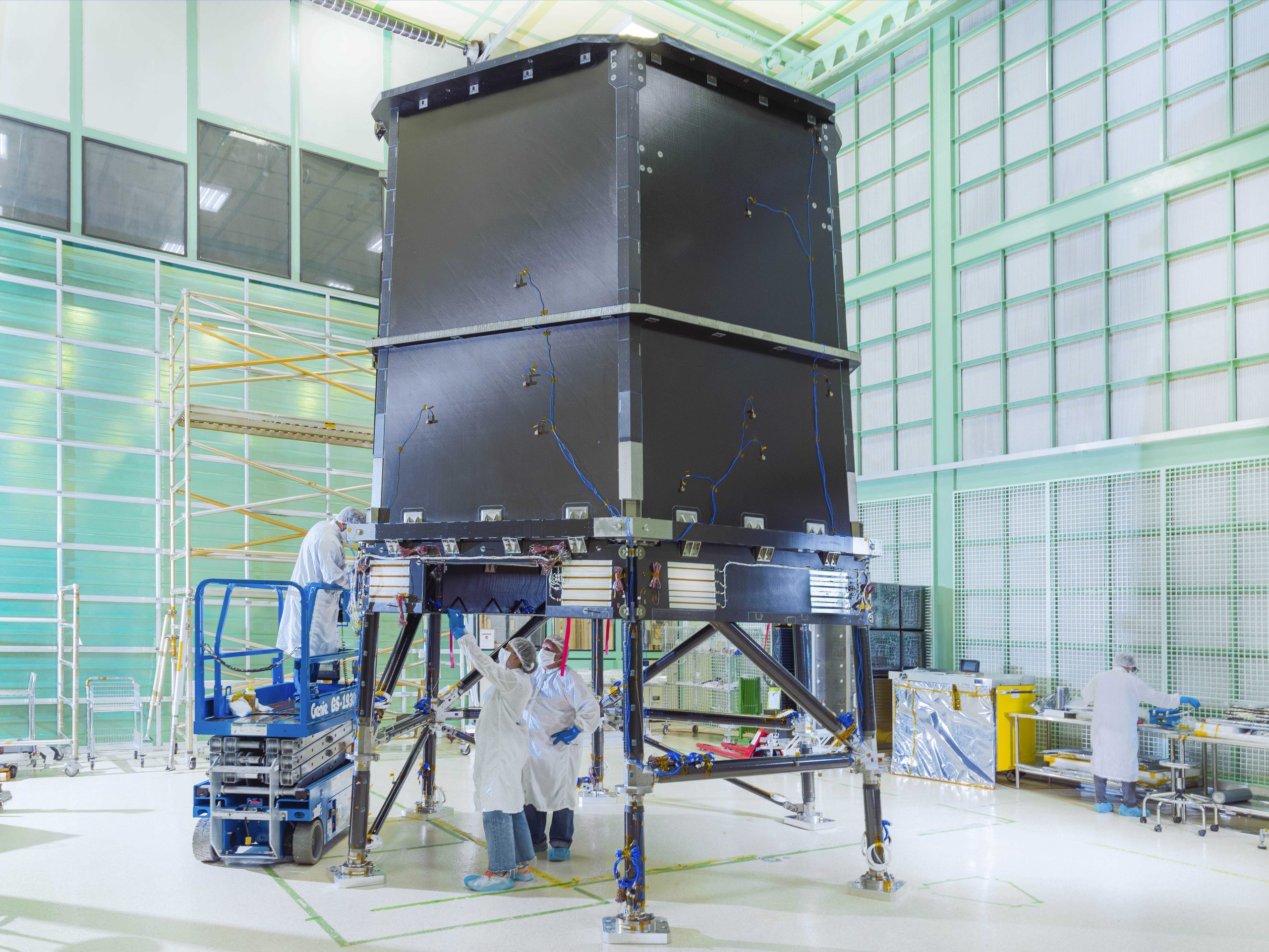
Un nou pas important în construcția telescopului spațial Nancy Grace Roman al NASA a fost realizat la Centrul de Zbor Spațial al NASA din Greenbelt, Maryland. Componenta majoră numită Asamblajul Exterior al Barelului a fost supusă unui test de rotație pe centrifugă pentru a se asigura că telescopul va fi menținut la o temperatură stabilă și protejat de lumină nedorită.

Testul a avut loc într-o cameră de test rotundă, unde un braț de oțel de 600.000 de livre (272.000 de kilograme) se extinde de la un rulment gigant în centrul podelei. Acest test a reprezentat o versiune sofisticată a unui popular joc de distracție de la carnaval, aplicând forța centrifugală asupra asamblajului pentru a simula efectele gravitației de peste 7 ori mai puternice decât gravitația Pământului.

Asamblajul Exterior al Barelului a fost testat în două etape distincte, deoarece este prea mare pentru a fi testat ca întreg în camera de centrifugă. Prima parte testată a fost suportul numit “elephant stand”, care conectează partea superioară a asamblajului la autobuzul navei spațiale și a fost simulat cu greutăți pentru a imita masa întregului asamblaj.

În etapa următoare, a fost testată “casa” – partea exterioară care înconjoară telescopul. Aceste componente sunt realizate din fibre de carbon și plastic reforțat, conectate cu piese de titan, pentru a fi rigide și ușoare, asigurând că temperaturile nu vor fluctua brusc.

Asamblajul Exterior al Barelului, proiectat la Goddard și construit de Applied Composites în California, va fi integrat cu panourile solare și capacul de deschidere a aperaturii la sfârșitul anului. Componentele integrate vor fi supuse testelor termo-vacuum și de vibrații pentru a se asigura că vor rezista condițiilor din spațiu și la lansare.

Cu toate acestea, proiectul nu se oprește aici, iar în 2025, aceste componente vor fi integrate cu restul observatorului Nancy Grace Roman. Așadar, telescopul spațial este pe drumul cel bun pentru a fi lansat și pentru a începe să ofere imagini spectaculoase ale universului nostru.

A major component of NASA’s Nancy Grace Roman Space Telescope just took a spin on the centrifuge at NASA’s Goddard Space Flight Center in Greenbelt, Maryland. Called the Outer Barrel Assembly, this piece of the observatory is designed to keep the telescope at a stable temperature and shield it from stray light.

The two-part spin test took place in a large, round test chamber. Stretching across the room, a 600,000-pound (272,000-kilogram) steel arm extends from a giant rotating bearing in the center of the floor.

The test itself is like a sophisticated version of a popular carnival attraction, designed to apply centrifugal force to the rider — in this case, the outer covering for Roman’s telescope. It spun up to 18.4 rotations per minute. That may not sound like much, but it generated force equivalent to just over seven times Earth’s gravity, or 7 g, and sent the assembly whipping around at 80 miles per hour.

“We couldn’t test the entire Outer Barrel Assembly in the centrifuge in one piece because it’s too large to fit in the room,” said Jay Parker, product design lead for the assembly at Goddard. The structure stands about 17 feet (5 meters) tall and is about 13.5 feet (4 meters) wide. “It’s designed a bit like a house on stilts, so we tested the ‘house’ and ‘stilts’ separately.”

The “stilts” went first. Technically referred to as the elephant stand because of its similarity to structures used in circuses, this part of the assembly is designed to surround Roman’s Wide Field Instrument and Coronagraph Instrument like scaffolding. It connects the upper portion of the Outer Barrel Assembly to the spacecraft bus, which will maneuver the observatory to its place in space and support it while there. The elephant stand was tested with weights attached to it to simulate the rest of the assembly’s mass.

Next, the team tested the “house” — the shell and a connecting ring that surround the telescope. These parts of the assembly will ultimately be fitted with heaters to help ensure the telescope’s mirrors won’t experience wide temperature swings, which make materials expand and contract.

To further protect against temperature fluctuations, the Outer Barrel Assembly is mainly made of two types of carbon fibers mixed with reinforced plastic and connected with titanium end fittings. These materials are both stiff (so they won’t warp or flex during temperature swings) and lightweight (reducing launch demands).

If you could peel back the side of the upper portion –– the house’s “siding” –– you’d see another weight-reducing measure. Between inner and outer panels, the material is structured like honeycomb. This pattern is very strong and lowers weight by hollowing out portions of the interior.

Designed at Goddard and built by Applied Composites in Los Alamitos, California, Roman’s Outer Barrel Assembly was delivered in pieces and then put together in a series of crane lifts in Goddard’s largest clean room. It was partially disassembled for centrifuge testing, but will now be put back together and integrated with Roman’s solar panels and Deployable Aperture Cover at the end of the year.

In 2025, these freshly integrated components will go through thermal vacuum testing together to ensure they will withstand the temperature and pressure environment of space. Then they’ll move to a shake test to make sure they will hold up against the vibrations they’ll experience during launch. Toward the end of next year, they will be integrated with rest of the observatory.

To virtually tour an interactive version of the telescope, visit:

https://roman.gsfc.nasa.gov/interactive

The Nancy Grace Roman Space Telescope is managed at NASA’s Goddard Space Flight Center in Greenbelt, Maryland, with participation by NASA’s Jet Propulsion Laboratory and Caltech/IPAC in Southern California, the Space Telescope Science Institute in Baltimore, and a science team comprising scientists from various research institutions. The primary industrial partners are BAE Systems, Inc in Boulder, Colorado; L3Harris Technologies in Rochester, New York; and Teledyne Scientific & Imaging in Thousand Oaks, California.

By Ashley Balzer
NASA’s Goddard Space Flight Center, Greenbelt, Md.

​​Media Contact:
Claire Andreoli
NASA’s Goddard Space Flight Center
301-286-1940


Acest titlu a fost scris de inteligență artificială Chat GPT, unele date pot fi incorecte. Pentru stirea originala, verificati sursa: Link catre sursa

Sursa si foto: NASA

 În plus, ar putea să-ți placă
Loading RSS Feed

Recomandari STIRIdinROMANIA.ro

România își consolidează vizibilitatea pe piața chineză prin participarea la târgul internațional de turism ITB China

România este promovată, în perioada 26–28 mai, la ITB China, cea mai importantă expoziție comercială dedicată profesioniștilor din industria...

Read More...

Tragedie pe strada Dragos Voda din Timisoara: Un caine a pierit in urma unei explozii de butelie GPL

Astăzi, în jurul orei 15,55, pompierii militari de la ISU Timiș au fost solicitați să intervină pentru stingerea unui...

Read More...

Beneficii pentru absolvenți și tineri la primul loc de muncă

Absolvenții de liceu sau facultate pot beneficia de indemnizație de șomaj, imediat după finalizarea studiilor. Agenția Județeană pentru Ocuparea...

Read More...

Leave a reply:

Your email address will not be published.

CAPTCHA ImageChange Image

Acest site folosește Akismet pentru a reduce spamul. Află cum sunt procesate datele comentariilor tale.

Mobile Sliding Menu

stiri & ziare online