Expozitia Noului Avion Hibrid Electric NASA-magniX

BY: stiridinromania.ro In Magazin
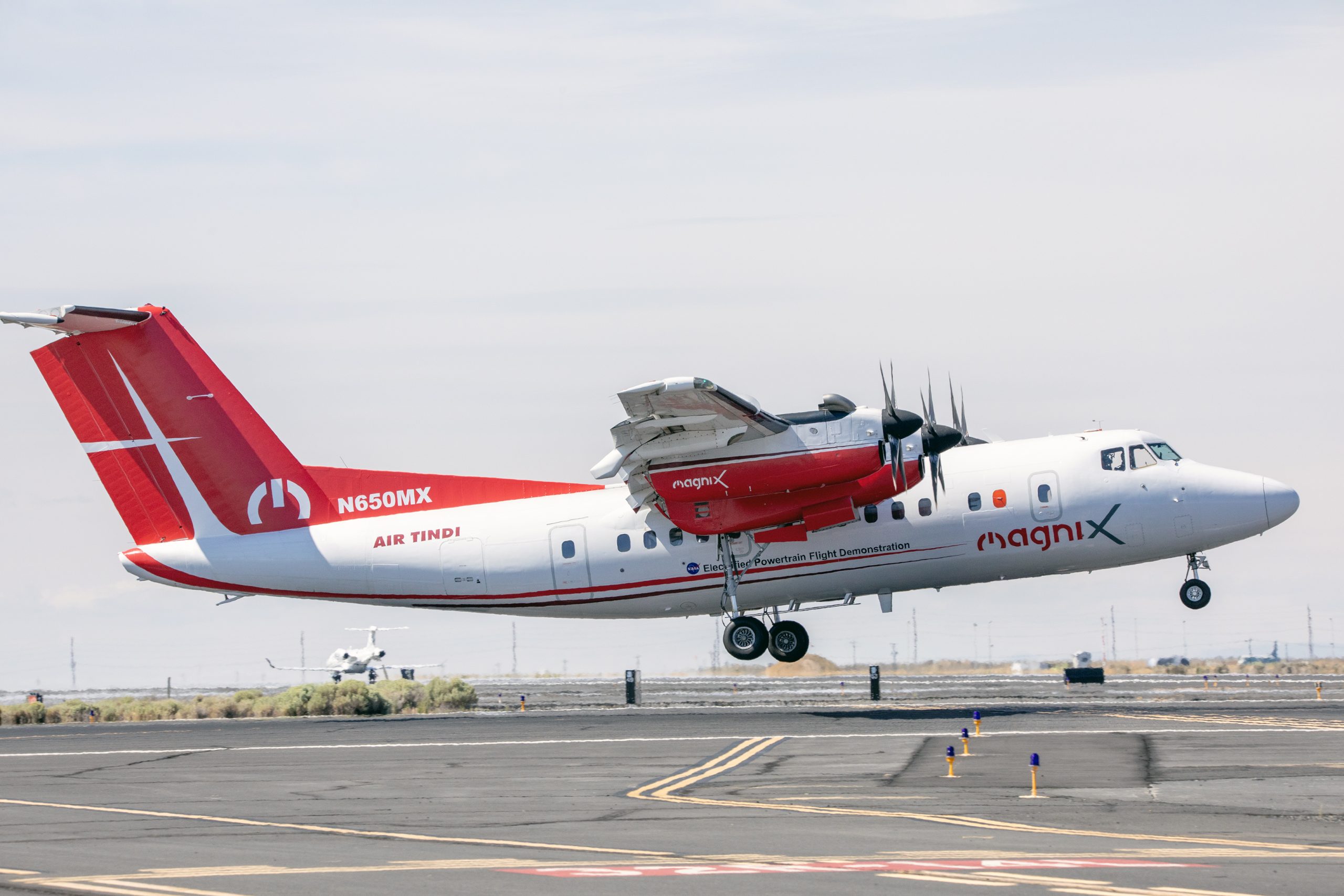
A four-engine turboprop aircraft in a red and white livery takes off from a runway on its way to be modified into a hybrid electric aircraft. Other airplanes can be seen in the distance.

Un avion de cercetare hibrid electric, fabricat de producătorul de motoare electrice magniX, a fost prezentat în lumina reflectoarelor într-un hangar din Seattle, simbolizând parcursul său către ajutarea NASA să facă aviația durabilă o realitate. Acest avion, modelul De Havilland Dash 7, a fost utilizat anterior pentru transportul de marfă, iar acum va fi modificat de magniX sub proiectul NASA Electrified Powertrain Flight Demonstration (EPFD) pentru a servi drept platformă de testare pentru cercetarea propulsiei hibride electrice.

Scopul companiei sub proiectul EPFD este de a demonstra economiile potențiale de combustibil și îmbunătățirile de performanță cu un sistem hibrid electric pentru aeronave regionale care transportă până la 50 de pasageri. Aceste eforturi vor contribui la reducerea impactului mediului din aviație prin scăderea emisiilor de gaze cu efect de seră.

NASA colaborează cu industria pentru a modifica avioanele existente cu noi sisteme de propulsie aeronautică electrificate. Aceste platforme de testare a aeronavelor vor ajuta la demonstrarea beneficiilor sistemelor de propulsie hibride electrice în reducerea consumului de combustibil și a emisiilor pentru aeronavele comerciale viitoare.

Sistemul tipic de propulsie hibrid electric combină surse diferite de energie, cum ar fi combustibilul și electricitatea, pentru a alimenta o aeronavă. În cadrul demonstrației magniX, Dash 7 modificat va fi echipat cu două motoare electrice alimentate de baterii stocate în cabină și două turbopropulsoare alimentate cu gaz.

Începând cu înlocuirea unuia dintre motoarele exterioare turboprop cu un nou motor electric magni de 650 de kilowați, magniX va efectua teste pentru a asigura siguranța funcționării acestor modificări. Apoi, compania va înlocui și motorul turboprop exterior rămas cu un altul electric.

Colaborarea dintre EPFD, NASA, GE Aerospace și magniX lucrează pentru a avansa tehnologiile de propulsie aeronautică hibrid electric pentru aeronavele comerciale de următoarea generație în intervalul de timp al anilor 2030. Prin testarea riguroasă a acestor noi tehnologii în condiții simulare de zbor, cercetătorii pot asigura funcționarea în siguranță a fiecărui component înainte de a se ridica în aer.

În final, proiectul EPFD se dovedește a fi o inițiativă importantă pentru NASA și partenerii săi, accelerând progresul Statelor Unite către obiectivul de emisii zero de gaze cu efect de seră până în 2050 și aducând beneficii tuturor celor care depind de transportul aerian în fiecare zi.

Parked under the lights inside a hangar in Seattle, a hybrid electric research aircraft from electric motor manufacturer magniX showed off a new look symbolizing its journey toward helping NASA make sustainable aviation a reality.  

During a special unveiling ceremony hosted by magniX on Aug. 22, leaders from the company and NASA revealed the aircraft, with its new livery, to the public for the first time at King County International Airport, commonly known as Boeing Field.  

The aircraft is a De Havilland Dash 7 that was formerly used for carrying cargo. Working under NASA’s Electrified Powertrain Flight Demonstration (EPFD) project, magniX will modify it to serve as a testbed for hybrid electric aircraft propulsion research.    

The company’s goal under EPFD is to demonstrate potential fuel savings and performance boosts with a hybrid electric system for regional aircraft carrying up to 50 passengers. These efforts will help reduce environmental impacts from aviation by lowering greenhouse gas emissions. 

This livery recognizes the collaborative effort focused on proving that hybrid electric flight for commercial aircraft is feasible. 

“We are a research organization that continues to advance aviation, solve the problems of flight, and lead the community into the future,” said Robert A. Pearce, associate administrator for NASA’s Aeronautics Research Mission Directorate. “Through our EPFD project, we’re taking big steps in partnership to make sure electric aviation is part of the future of commercial flight.” 

NASA is collaborating with industry to modify existing planes with new electrified aircraft propulsion systems. These aircraft testbeds will help demonstrate the benefits of hybrid electric propulsion systems in reducing fuel burn and emissions for future commercial aircraft, part of NASA’s broader mission to make air travel more sustainable.  

“EPFD is about showing how regional-scale aircraft, through ground and flight tests, can be made more sustainable through electric technology that is available right now,” said Ben Loxton, vice president for magniX’s work on the EPFD project.  

Thus far, magniX has focused on developing a battery-powered engine and testing it on the ground to make sure it will be safe for work in the air. The company will now begin transitioning over to a new phase of the project — transforming the Dash 7 into a hybrid electric research vehicle.  

“With the recent completion of our preliminary design review and baseline flight tests, this marks a transition to the next phase, and the most exciting phase of the project: the modification of this Dash 7 with our magniX electric powertrain,” Loxton said.  

To make this possible, magniX is working with their airframe integrator AeroTEC to help modify and prepare the aircraft for flight tests that will take place out of Moses Lake, Washington. Air Tindi, which supplied the aircraft to magniX for this project, will help with maintenance and support of the aircraft during the testing phases.  

A typical hybrid electric propulsion system combines different sources of energy, such as fuel and electricity, to power an aircraft. For magniX’s demonstration, the modified Dash 7 will feature two electric engines fed by battery packs stored in the cabin, and two gas-powered turboprops.  

The work will begin with replacing one of the aircraft’s outer turboprop engines with a new, magni650-kilowatt electric engine – the base of its hybrid electric system. After testing those modifications, magniX will swap out the remaining outer turboprop engine for an additional electric one. 

Earlier this year, magniX and NASA marked the milestone completion of successfully testing the battery-powered engine at simulated altitude. Engineers at magniX are continuing ground tests of the aircraft’s electrified systems and components at NASA’s Electric Aircraft Testbed (NEAT) facility in Sandusky, Ohio.  

By rigorously testing these new technologies under simulated flight conditions, such as high altitudes and extreme temperatures, researchers can ensure each component operates safely before taking to the skies. 

The collaboration between EPFD, NASA, GE Aerospace, and magniX works to advance hybrid electric aircraft propulsion technologies for next-generation commercial aircraft in the mid-2030 timeframe. NASA is working with these companies to conduct two flight demonstrations showcasing different approaches to hybrid electric system design. 

Researchers will use data gathered from ground and flight tests to identify and reduce certification gaps, as well as inform the development of new standards and regulations for future electrified aircraft. 

“We at NASA are excited about EPFD’s potential to make aviation more sustainable,” Pearce said. “Hybrid electric propulsion on a megawatt scale accelerates U.S. progress toward its goal of net-zero greenhouse gas emissions by 2050, benefitting all who rely on air transportation every day.”


Acest titlu a fost scris de inteligență artificială Chat GPT, unele date pot fi incorecte. Pentru stirea originala, verificati sursa: Link catre sursa

Sursa si foto: NASA

 În plus, ar putea să-ți placă
Loading RSS Feed

Recomandari STIRIdinROMANIA.ro

Capul iepei, salvat din groapa în ultima clipă

Intervenție contracronometru, în această dimineață, pentru salvarea unei iepe căzute într-o groapă îngustă, din care i se mai...

Read More...

Noul Ambulatoriu Integrat la Spitalul Clinic de Urgență pentru Copii din Timișoara

Spitalul Clinic de Urgență pentru Copii „Louis Țurcanu” Timișoara a anunțat deschiderea Ambulatoriului Integrat, din data de 11.05.2026, care...

Read More...

Atelier de limbă și cultură coreeană la Universitatea de Vest din Timișoara

Facultatea de Litere, Istorie, Filosofie și Teologie din cadrul Universității de Vest din Timișoara își continuă seria de evenimente...

Read More...

Leave a reply:

Your email address will not be published.

CAPTCHA ImageChange Image

Acest site folosește Akismet pentru a reduce spamul. Află cum sunt procesate datele comentariilor tale.

Mobile Sliding Menu

stiri & ziare online