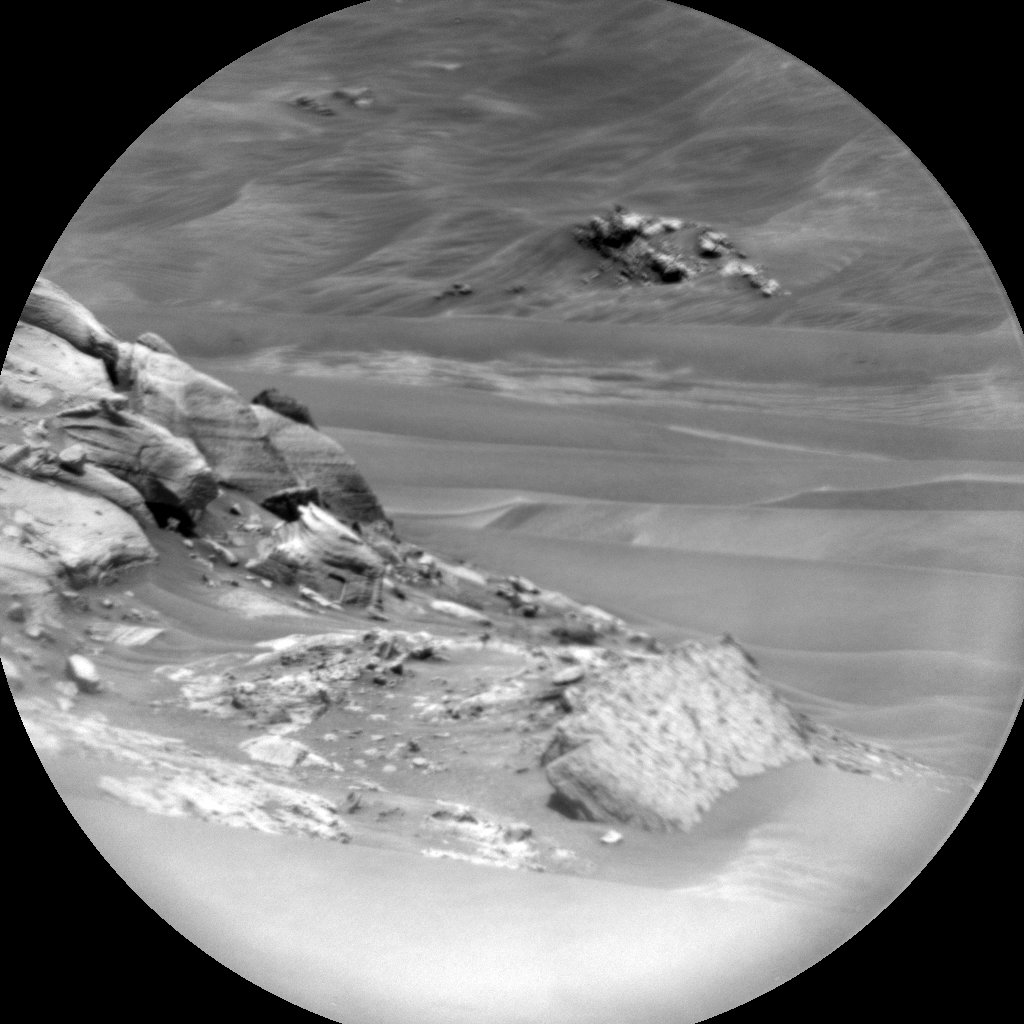
Curiozitatea Navigation Curiozitatea Acasă Misiunea generală Unde este Curiozitatea? Actualizări ale misiunii Prezentare generală a științei Instrumente Repere Scopuri de explorare Știri și caracteristici Multimedia Imagini brute Curiozitate Imagini Video Audio Mai multe resurse Misiuni pe Marte Întoarcerea mostrei de pe Marte Roverul Perseverance pe Marte Roverul Curiosity pe Marte MAVEN Marte Orbiter de recunoaștere Marte Odyssey Mai multe misiuni pe Marte Sistemul solar Soarele Mercur Venus Pământ Luna Marte Jupiter Saturn Uranus Neptun Pluto & Planete pitice Asteroizi, comete și meteori Centura Kuiper Norul Oort 5 min citit Sols 4304-4006: 12 ani, 42 de găuri de foraj, și acum…1 milion de fotografii ChemCam! Cu ocazia sărbătoririi realizării lui ChemCam, iată o imagine uluitoare de la micro-imaginea sa la distanță, arătând detalii în peisajul de departe. Această imagine a fost realizată de Chemistry & Camera (ChemCam) la bordul roverului Curiosity al NASA pe Sol 4302 – ziua marțiană 4.302 a misiunii Laboratorul de Știință pe Marte – la 12 septembrie 2024, la 09:20:51 UTC. NASA/JPL-Caltech Data planificării pe Pământ: vineri, 13 septembrie 2024 Astăzi, trebuie să vorbesc despre ChemCam, instrumentul nostru de laser și imagine de pe partea de sus a antenei lui Curiosity. Este unul dintre instrumentele din “capul” care îi conferă lui Curiozitate acea privire drăguță ca și cum ar privi în jur, înclinându-și capul până la stânca de la roțile roverului. Luni, 19 august, echipa ChemCam de la CNES din Franța a planificat cel de-al un milionul șut și Curiosity l-a executat pe ținta Royce Lake pe solul 4281 de pe Marte. Chiar și ca un savant de pe Pământ obișnuit cu numerele foarte mari, acesta este un număr uriaș care mi-a luat ceva timp să-l înțeleg în întregime. 1 000 000 de șuturi! Felicitări, ChemCam, campionul nostru pentru a obține chimie de la distanță – și imagini de înaltă rezoluție, de asemenea. Dacă acum ești curios cum funcționează instrumentul ChemCam al Curiozității, iată foaia informativă NASA. Și, desigur, echipa sărbătorește, ceea ce este exprimat de cele două comunicate de presă, unul de la CNES din Franța și unul de la Laboratorul Național Los Alamos, cele două instituții care au colaborat pentru a dezvolta și construi ChemCam și care rulează acum instrumentul de peste 12 ani! Și PI, Dr. Nina Lanza de la Los Alamos, mă informează că primul obiectiv – 10.000 de șuturi a fost atins la fel de devreme ca Sol 42, care a fost ziua când instrumentul DAN a folosit pentru prima dată modul său activ. Dar înainte să devin melancolic, să vorbim despre planul de astăzi! Conducerea s-a încheiat destul de sus în teren, și asta înseamnă că vedem multe dintre caracteristicile interesante din canal și în general în jurul nostru. Așa că suntem într-un loc în care un drumeț uman ar pune probabil rucsacul jos, ar scoate sticla de apă și ar sta jos cu un snack pentru a se bucura de priveliștea de pe un punct înalt frumos în peisaj. Ei bine, niciun astfel de plăceri pentru Curiozitate – și sunt destul de sigur că zahărul, pe care noi oamenii îl iubim atât de mult, nu ar fi apreciat de angrenajele roverului oricum. Deci, pur și simplu să ne bucurăm de priveliști! Și asta ține ocupat Mastcam-ul, având un avantaj deplin din punctul nostru de vedere actual. Avem un teren cu multă varietate în fața noastră, blocuri, bolovani, zone mai plate și pereții sunt stratificați, geologie frumoasă. În total, sunt 11 observații Mastcam în plan, adunând în jur de 100 de cadre individuale, fără a număra cele luate în contextul observațiilor atmosferice, care sunt desigur și ele în plan. Cele mai mari mozaicuri sunt pe țintele “Depozitul Occidental”, “Domul Balonului” și “Pășunea Corală”. Unele imagini de documentare mai mici sunt pe țintele “Lacul Wales”, “Pășunea Gnat” și “Gura de Porc”. ChemCam nu a avut mult timp să se oprească la realizarea sa, deoarece este din nou ocupat astăzi. Desigur, se va alătura Mastcam-ului în a profita de punctul nostru de vedere, realizând trei imagini pe micro-imaginea la distanță pe peisajul din jurul nostru. Investigațiile de chimie LIBS vizează “Lacul Wales”, “Pășunea Gnat” și “Gura de Porc”. APXS investighează două ținte, “Colțul Colegiului” și “Lacul Wales”, care vor veni, de asemenea, cu documentația MAHLI. Cu toate aceste investigații împreună, vom putea documenta chimia multor ținte din jurul nostru. Există o varietate atât de bogată de roci întunecate și luminoase, și cu atât de multă varietate pretutindeni, este greu de ales și echipa este entuziasmată de cele trei soluri țintite… și planificând peste 4 ore de știință în weekend! Următoarea conducere este planificată să meargă către o zonă în care există un pas în peisaj. Geologii iubesc acei pase, deoarece oferă indicii despre straturile sub suprafața imediată. Dacă ai citit cuvântul ‘strat expus’ aici, atunci asta înseamnă asta: acces la sub suprafața. Dar există și alte caracteristici interesante în zonă, așa că cu siguranță vom avea un spațiu de lucru interesant de analizat! Dar ajungerea acolo nu va fi ușoară, deoarece terenul este foarte complex, așa că nu putem face asta într-o singură conducere. Cred că există o regulă generală aici: cu cât se entuziasmează mai mult echipa geo, cu atât mai multe abilități au nevoie șoferii noștri. Geologii iubesc pur și simplu rocile, dar desigur, nimeni nu-i place să conducă offroad într-un teren cu adevărat stâncos – nu există drumuri pe Marte. Și chiar acum, inginerii noștri excelenți au o complicare în plus de care să țină cont: trebuie să aibă grijă unde și cum să parcheze pentru ca Curiozitatea să poată comunica efectiv cu Pământul. De ce? Ei bine, suntem într-un canion, iar cei dintre voi care iubiți să faceți drumeții, știți ce înseamnă canioanele pentru semnalele de telefonie mobilă… da, nu există mult acoperire, și asta e la fel și pentru antena Curiozității. Acest nou videoclip NASA are mai multe informații și perspective în camera de planificare, de asemenea! Deci, vom conduce până la jumătatea drumului către locul unde vrem să fim, dar sunt sigur că vor fi ținte interesante în noul spațiu de lucru, zona este atât de, atât de complexă, fascinantă și bogată! Și asta după Marte pentru tine, după 12 ani, 42 de găuri de foraj și acum 1 milion de fotografii ChemCam. Hai Curiozitatea hai!!! Scris de Susanne Schwenzer, geolog planetar la Open University. Detalii actualizate ultima dată la 13 septembrie 2024.
Acest titlu a fost scris de inteligență artificială Chat GPT, unele date pot fi incorecte. Pentru stirea originala, verificati sursa: Link catre sursa
Sursa si foto: NASA

Mai multe gasiti pe pagina de Facebook stiridinromania.ro!
Daca ati fost martorii unui eveniment sau ai unei situatii neobisnuite care ar putea deveni subiect de stire, contactati-ne la admin @ stiridinromania.ro sau pe contul nostru de Facebook stiridinromania.ro!